Riveting
Riveting is an extremely widespread, universal process used in a wide variety of manufacturing sectors.
EMG designs and manufactures presses of different technologies, both manual and motorized, to carry out a wide range of riveting operations. Whatever the material of the parts to be joined, their shape, the diameter of the rivet, we put our know-how and experience at your service to meet all your needs.
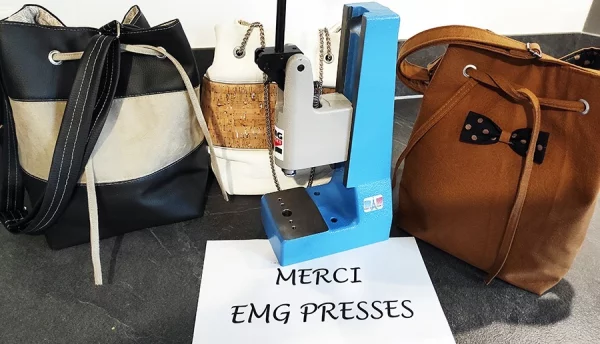
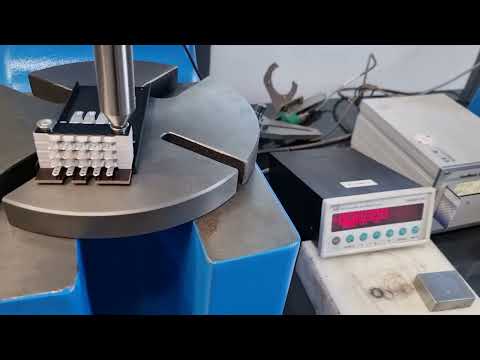
Riveting, final assembly of metal parts by pressing
Riveting is the final assembly of two metal parts. This assembly cannot be dismantled without destroying the fastener (drifting). This process is particularly well-suited to joining two thin parts.
Riveting is achieved by compressing the parts to be joined together, and then crushing one end of the rivet with the upper part of the tool. The deformation of the rivet creates a head which holds the parts together. This type of assembly is safe and perfectly solid for all types of materials.
The process also offers high vibration resistance, thanks to the fact that the rivet housing is completely filled. This recess is the hole made when punching the sheet metal to allow the rivet shank to pass through. Riveting is a technique that ensures perfect contact between the surfaces of the metal sheets and equally constant, powerful clamping of the assembled parts.
Rivet types and uses
There are several types of rivet. Each type is adapted to specific applications. Blind rivets, otherwise known as “pop rivets”, are used when access to only one side of the assembly is possible. Solid rivets are preferred for assemblies requiring maximum strength. Rivets in steel, aluminum, brass and other composite materials offer a variety of assembly solutions, depending on the project and the type of material to be joined.
Hollow rivets are a derivative of the solid rivet, and require several stages of mandrel striking to create a hole on either side of the workpiece. This type of rivet is used when weight is a critical factor. Wide-head rivets offer better load distribution across the assembly surface.
There are many other types of rivet, such as threaded rivets, drive pin rivets, tubular rivets and split rivets.
Advantages and disadvantages of riveting compared with other assembly methods
Riveting offers significant advantages, particularly in terms of strength and durability. Rivets are remarkably strong (resistant to vibration and wear). Installation is quick and easy. High-yield production can be envisaged with this assembly method. Riveting is also less expensive than bolting, screwing or welding.
The disadvantages of riveting include the need to feed and drill for assembly, the absence of a watertight joint, a heavier weight than welding, for example, and a potentially high noise level when striking.
Riveting, arc welding, screwing: what are the differences, which process to choose?
Riveting and arc welding are two assembly methods commonly used in the textile, automotive and aerospace industries. Riveting requires no heat, thus avoiding deformation of sensitive materials. Arc welding, on the other hand, creates more permanent metallic bonds. The choice between these methods depends on the type of material, time constraints and strength required.
The choice between riveting and screwing depends on the requirements of the assembly. Riveting provides a strong, permanent fastening, ideal for metal assemblies and structural applications. Screws, on the other hand, allow easy disassembly, which is advantageous for applications requiring regular maintenance. Each method offers advantages in terms of cost, time and durability.
Steps in the riveting process
The riveting process follows a number of steps to ensure a strong assembly:
Step 1: preparation of parts to be joined
Step 2: Rivet selection - type, size, material - according to application requirements,
Step 3: positioning the rivet in the hole of the part to be joined,
Step 4: press actuation: using the lever for manual presses and the control unit for pneumatic and hydropneumatic presses.
Step 5: check that the rivet head is properly formed and that no cracks have appeared.
What type of press should I choose for riveting metal parts?
Just as manual rack and toggle presses are used for riveting flexible materials such as textiles and plastics, pneumatic and hydropneumatic presses are used in industry for riveting metal parts.
In fact, pneumatic and hydropneumatic presses are the most suitable for this type of assembly , since this operation requires a very high level of effort, especially at the end of the stroke when the rivet head is being formed. And, of course, this has to be done without damaging the surface of even the thinnest sheets and plates to be joined.
The ability to control the lowering speed on pneumatic and hydropneumatic presses provides the operator with additional comfort. The use of a compressed-air cylinder on this type of press ensures high-quality, high-precision work, and the block formed by this process is built to stand the test of time.
As a manufacturer of presses for riveting metal parts, we bring you our know-how and experience to help you find the right riveting press for your application. Did you know that we also offer used riveting presses that have been completely dismantled, overhauled and inspected?
Common riveting applications in different industrial sectors
Riveting is essential in many industrial sectors, including automotive, shipbuilding and aerospace. Each sector benefits from the unique properties of riveting for specific applications.
Riveting in the automotive industry: fastening sheet metal and structural components
In the automotive industry, riveting is used to fasten sheet metal and structural components. It ensures a strong, durable bond between metal components. This method is favored for its ability to withstand vibration and dynamic forces. Steel and aluminum rivets are often used for their strength and lightness.
Riveting in shipbuilding: joining hulls and metal structures
Riveting is also a guarantee of robustness in shipbuilding. It is used, for example, to assemble hulls and metal structures. It offers exceptional resistance to corrosion and mechanical stress. Rivets in stainless steel and specific alloys are commonly used to guarantee optimum durability in demanding marine environments.
Riveting in aeronautics: guaranteeing the strength of aircraft assemblies
In the aeronautics industry, riveting is essential to guarantee the solidity of assemblies. It is used to secure fuselage panels and other aircraft components. Lightweight materials such as titanium and aluminum are chosen to minimize weight and maximize performance. Riveting ensures high resistance to pressure and temperature variations.
Recent innovations in riveting
The field of riveting has seen many innovations. Recent developments have focused on improving materials and technologies to enhance the efficiency and performance of fastening systems.
Titanium and aluminum rivets offer increased strength and significant weight reduction. Specific alloys are developed to meet particular requirements, such as resistance to corrosion and extreme temperatures. These materials enhance the durability and efficiency of assemblies.